

Bonded Warehouse in Saudi Arabia: What It Is and How to Run One
A bonded warehouse holds imported goods under customs control until they are released. This guide explains the idea, the records a bonded warehouse needs and where to confirm the rules.
Tafsee Team · · 5 min read
Many importers, freight forwarders and logistics companies in Saudi Arabia keep goods in a warehouse for some time before the goods can be delivered to the buyer. When that time is spent waiting for customs procedures, the warehouse is often a bonded one. This guide explains the idea in plain language and focuses on what a bonded warehouse needs to record every day.
It is a general guide. Customs rules in Saudi Arabia are set and enforced by ZATCA, the Zakat, Tax and Customs Authority, and they change. Always confirm current requirements for licences, goods and procedures on the official ZATCA website or with your customs clearance agent.
What is a bonded warehouse?
In general terms, a bonded warehouse is a storage facility approved by the customs authority where imported goods can be held under customs control. The goods are in the country physically, but the customs procedure for them is not finished. They stay in the warehouse until the owner completes the procedure, for example by clearing them for local use or sending them on to another destination.
The key idea is control. The authority needs to be able to trust that goods in the warehouse stay there until they are properly released. So the warehouse operator needs to know exactly what is inside, whose it is and whether it is allowed to leave.
Who uses bonded warehouses?
- Importers who want to store goods while paperwork and procedures are completed.
- Freight forwarders and shipping agents who consolidate and hold goods for several customers.
- Logistics companies that receive goods on behalf of customers and deliver them locally after release.
What a bonded warehouse needs to record
Whatever the exact regulation, the warehouse operator's daily records tend to cover the same ground.
What arrived and when
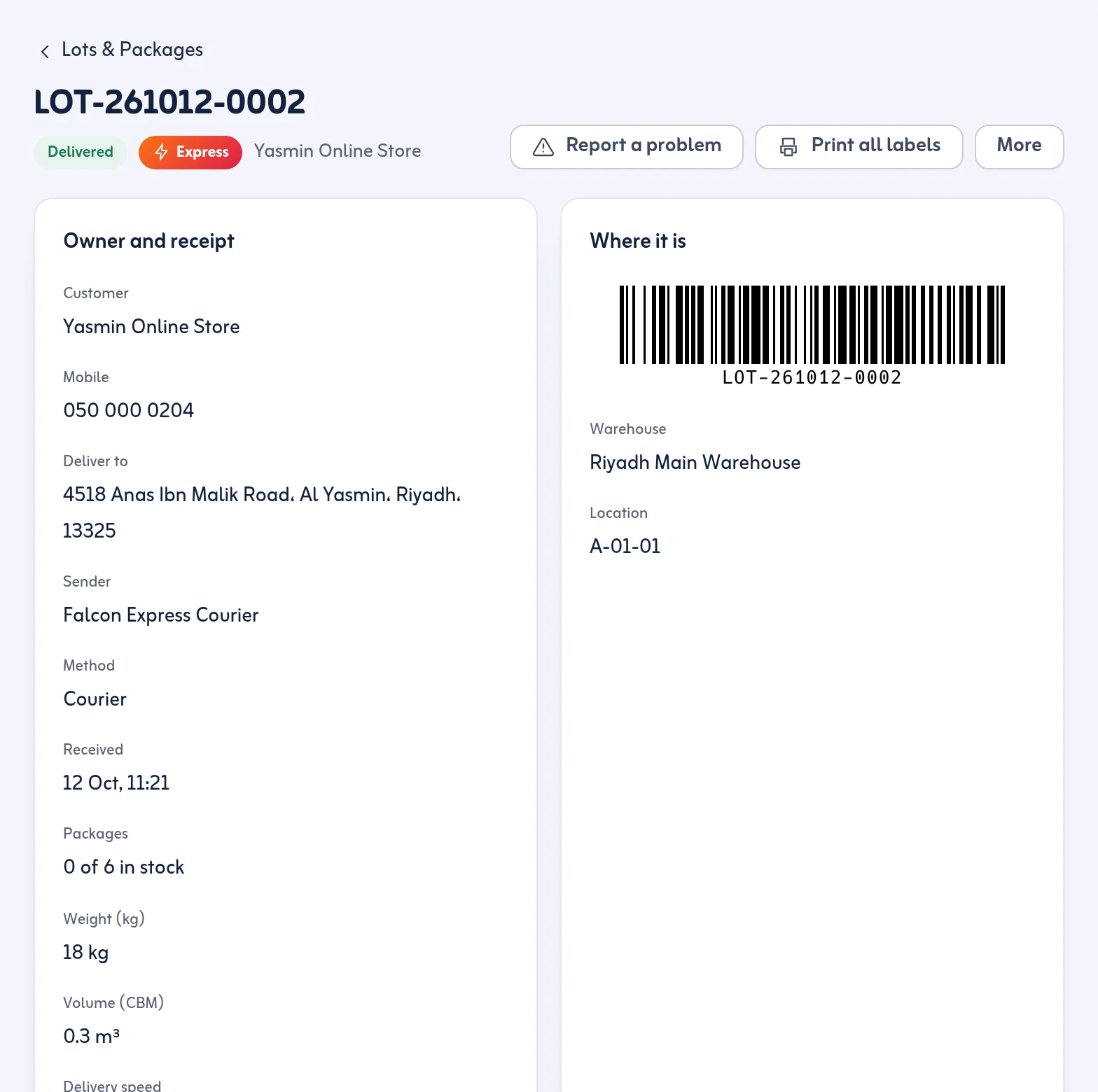
Each arrival needs a record: the sender or agent, the owner of the goods, the arrival method, the container number or bill of lading if there is one, the number of packages and the date and time. Photos on arrival help if there is damage. See the warehouse receiving process.
Whose goods they are
Goods in a shared warehouse belong to different customers. Mixing them up is expensive. Every lot should have a named owner, and every package should be identifiable on its own.
Where they are
A lot that cannot be found cannot be inspected or released. Record the zone and rack, and move records when goods move.
Why they are held
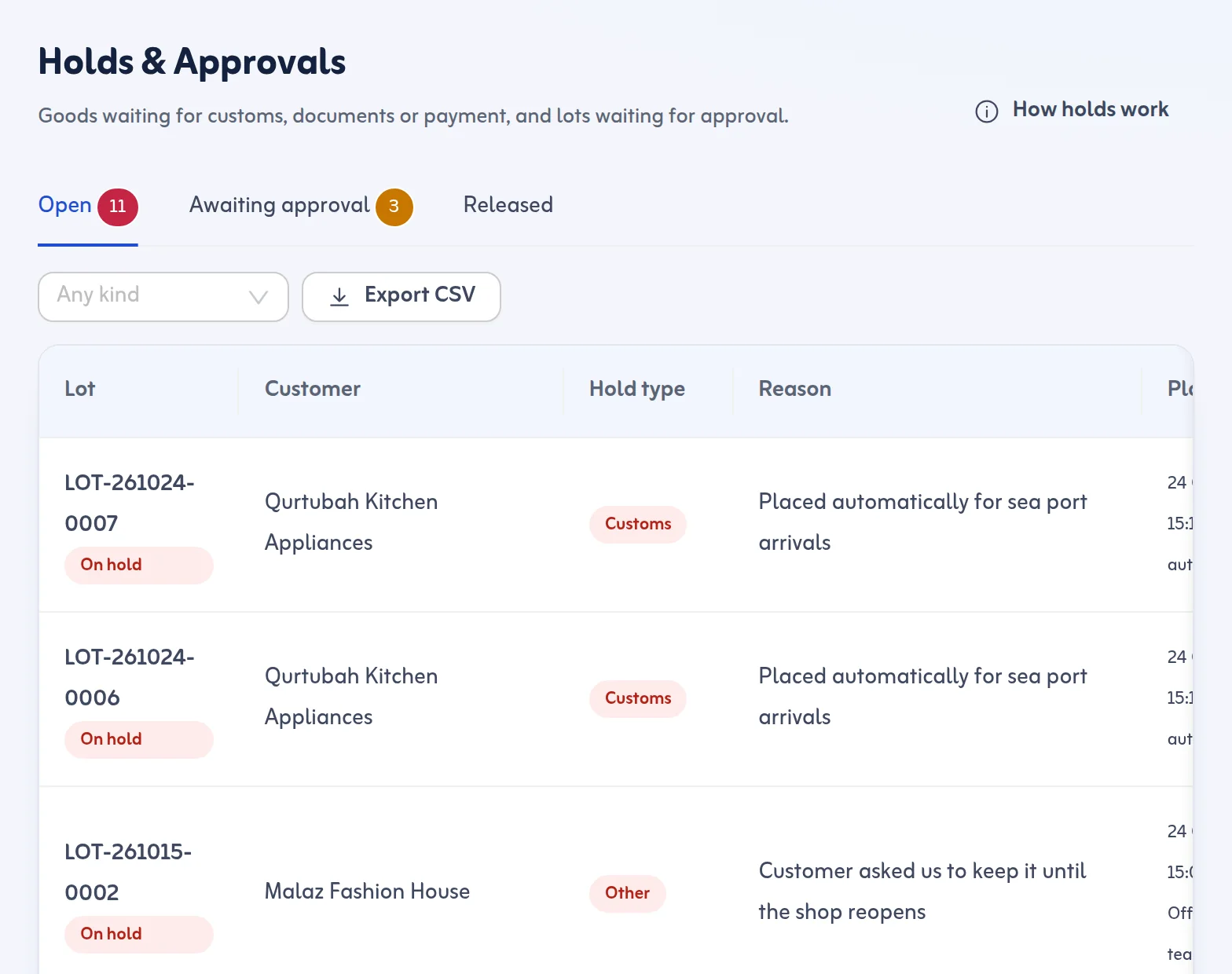
A hold is a recorded reason that goods may not leave: customs, missing documents, unpaid charges or something else. A bonded warehouse may have several holds on the same lot at the same time, and the goods can only leave when every one is released.
Who released them and when
Releasing goods is the moment that matters most. The record should show who released each hold, when and with what note. That record is what you show a customer, an agent or an auditor.
Common problems in bonded warehouses
- Goods leaving too early because a paper note was missed.
- No single list of what is on hold and why.
- Lots waiting for months with nobody noticing, while storage charges and customer frustration build up.
- One person who knows everything. When they leave, so does the knowledge.
- Arguments with customers about when goods arrived and when they were released.
- Time lost looking for goods that were moved without a record.
A practical routine
- Record every arrival immediately, with the owner and the references you have.
- Label each package with its own barcode so it can be scanned later.
- Place a hold on arrival if the goods need customs procedures or documents. Do not rely on memory.
- Review open holds every day. Sort them by age so the oldest are chased first.
- Release holds one at a time, with a note, and by a person allowed to do it.
- Dispatch only released goods. The system, not a person, should refuse to send goods that are still on hold.
- Count stock regularly so the record matches the shelves.
Delivery after release
For many bonded operators, the work does not end at release. The goods still have to reach the customer. Delivering from the same system that holds the goods avoids retyping addresses and customers' details, and keeps the history of one lot in a single place. See what is last mile delivery and what is proof of delivery.
How Tafsee Logistics handles holds and approvals
In Tafsee Logistics a hold has a type (customs, documents, payment, delivery or other) and a required reason. A lot can have several holds. It can be dispatched only when all holds are released and the lot is approved. Releasing needs a note, records who and when, and only owners, admins and dispatchers can do it. New lots can wait for approval, and automatic holds can be set per arrival method, for example a customs hold for sea and air arrivals.
The dashboard shows open holds and alerts you to holds older than the number of days you set. Reports show holds placed and released, average hours on hold and holds by type. See holds and approvals, software for bonded warehouses and the help article on holds and approvals.
Tafsee Logistics does not connect to customs systems and does not file customs declarations. It keeps your warehouse record. Look at the Tafsee Logistics overview or the plans and 14-day trial.
Running a bonded warehouse: Saudi Arabia's rules come from ZATCA, and your daily records are what make following them easy.
Questions
Frequently asked questions
In general terms, it is a storage facility approved by customs where imported goods are held under customs control until the owner completes the customs procedure.
Customs is handled by ZATCA, the Zakat, Tax and Customs Authority. Rules change, so confirm current requirements with ZATCA or your customs clearance agent.
Yes. In Tafsee Logistics a lot can carry several holds, and it can be dispatched only when all of them are released and the lot is approved.
No. It does not connect to customs systems. It keeps your warehouse record: arrivals, holds, releases, stock and delivery.
More articles
Receive your first shipment today
Try everything in Growth free for 14 days, then choose a plan. No card is needed.
- Arabic and English
- Built for Saudi Arabia, in SAR
- Nothing to install

Warehouse & delivery
Tafsee Logistics
Receive goods with a barcode on every package, hold them until they are cleared, then plan delivery trips with proof at every door.