
Lead generation is the work of turning strangers into people you are allowed to contact: someone who shares an email, a phone number or a request for a quote. The strategies below are the ones small teams can actually run, without a large budget or a dedicated agency.
Start with the basics: who is a lead for you?
Before choosing tactics, write down what a useful lead looks like. For a store it might be anyone who shares an email or WhatsApp number. For a B2B company it might be a business owner in Dubai or Riyadh who requests a demo. The definition decides which strategies are worth your time and how you measure them.
1. Capture visitors you already have
The cheapest leads come from traffic you are already paying for. Most sites convert only a small share of visitors into contacts. A well-timed popup, slide-in or floating bar with a clear offer is often the fastest improvement you can make.
- Use time, scroll or exit-intent triggers instead of popping up on arrival.
- Tailor the offer by page: product pages, pricing pages and blog posts need different messages.
- Keep forms short, and show the offer in Arabic for Arabic-speaking visitors.
2. Offer a real lead magnet
People share details when they get something useful immediately. A discount, a checklist, a template or early access usually beats a generic 'subscribe'. See our guide to what a lead magnet is and 20 ideas.
3. Publish content that answers real questions
Write articles and guides that answer the questions customers ask your sales or support team. Search traffic from those questions tends to be qualified, and each article can carry a relevant lead magnet. In the Gulf, publishing in both Arabic and English widens your reach considerably, as long as the Arabic is written for Arabic readers rather than translated word for word.
4. Run webinars and live sessions
A 30-minute live session on a specific problem (for example, preparing a store for Ramadan, or setting up e-invoicing) generates registrations and gives you a reason to follow up. Record it and use the recording as an on-demand lead magnet afterwards.
5. Use WhatsApp opt-in, with consent
WhatsApp is the default messaging app for many customers in the UAE and Saudi Arabia. Offering updates, order help or offers on WhatsApp can outperform email for some audiences. Ask for explicit consent, explain what you will send and how often, and make opting out simple. Use the official WhatsApp Business Platform rather than unofficial tools.
6. Make referrals easy
Happy customers are a strong source of new leads. Give them a simple reason and a simple way to refer: a shareable code, a reward for both sides, and a reminder after a positive moment such as delivery.
7. Show up at events and follow up fast
Trade shows, community meetups and industry events in Dubai, Abu Dhabi and Riyadh remain important for B2B. The difference is usually made after the event: collect contacts with a QR code to a short form, and follow up within a day or two while the conversation is fresh.
8. Partner with complementary businesses
Co-host a session, bundle offers or swap newsletter mentions with businesses that serve the same customers but do not compete with you. A payments provider and an e-commerce agency, for instance, share an audience.
9. Use social proof on key pages
Genuine reviews, recognisable client logos (with permission) and clear guarantees reduce hesitation on pages where people decide whether to contact you.
10. Improve your contact and quote forms
Many businesses lose leads on their own contact page. Reduce fields, offer WhatsApp as an option, say how quickly you reply, and confirm receipt clearly.
11. Run seasonal campaigns
Ramadan, Eid, White Friday and UAE National Day are moments when shoppers actively look for offers. Build signup campaigns ahead of each season, for example early access lists, so you start the season with an audience rather than from zero. See Ramadan offers and White Friday for examples.
12. Retarget and re-engage
Not everyone is ready the first time. Returning-visitor targeting, reminder emails and paid retargeting can bring back people who showed interest but did not act.
How to measure lead generation
- Conversion rate per page: leads divided by visitors, not just total leads.
- Lead quality: how many leads become customers or sales conversations.
- Cost per lead for paid channels, and time spent for organic ones.
- Speed to follow-up: leads contacted quickly are more likely to convert.
- Source: tag each lead with where it came from so you know which strategy to scale.
Where Tafsee Popup fits
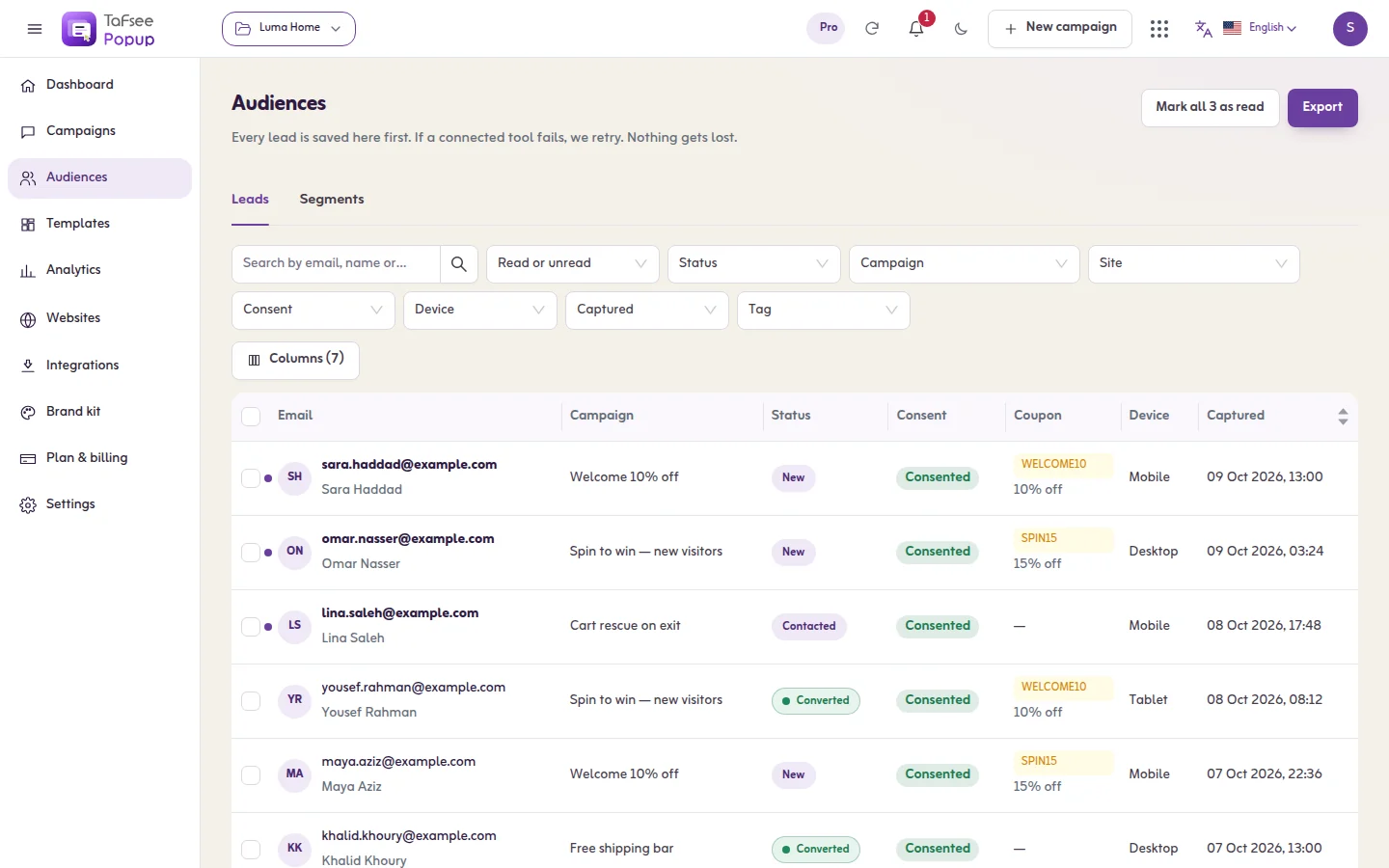
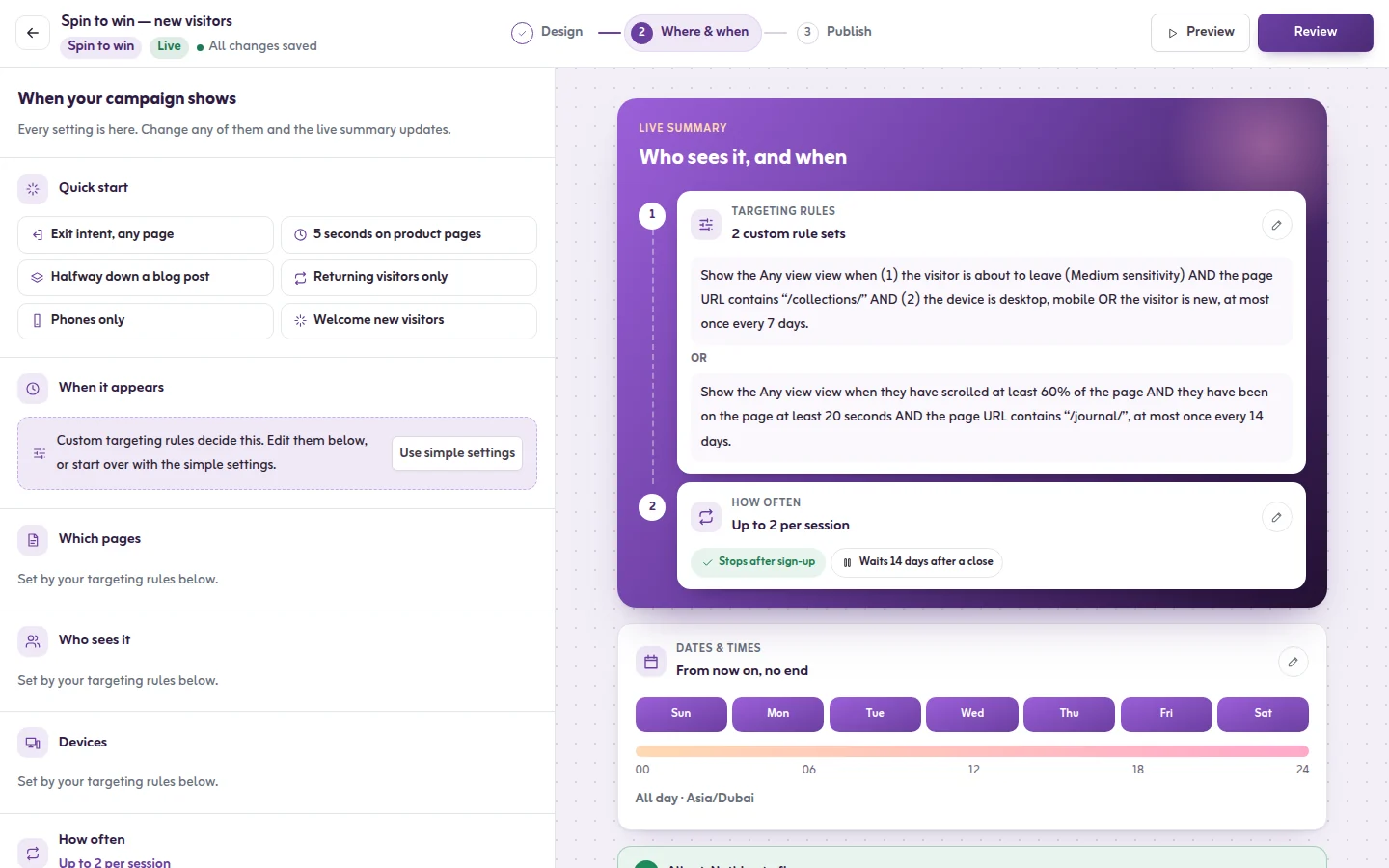
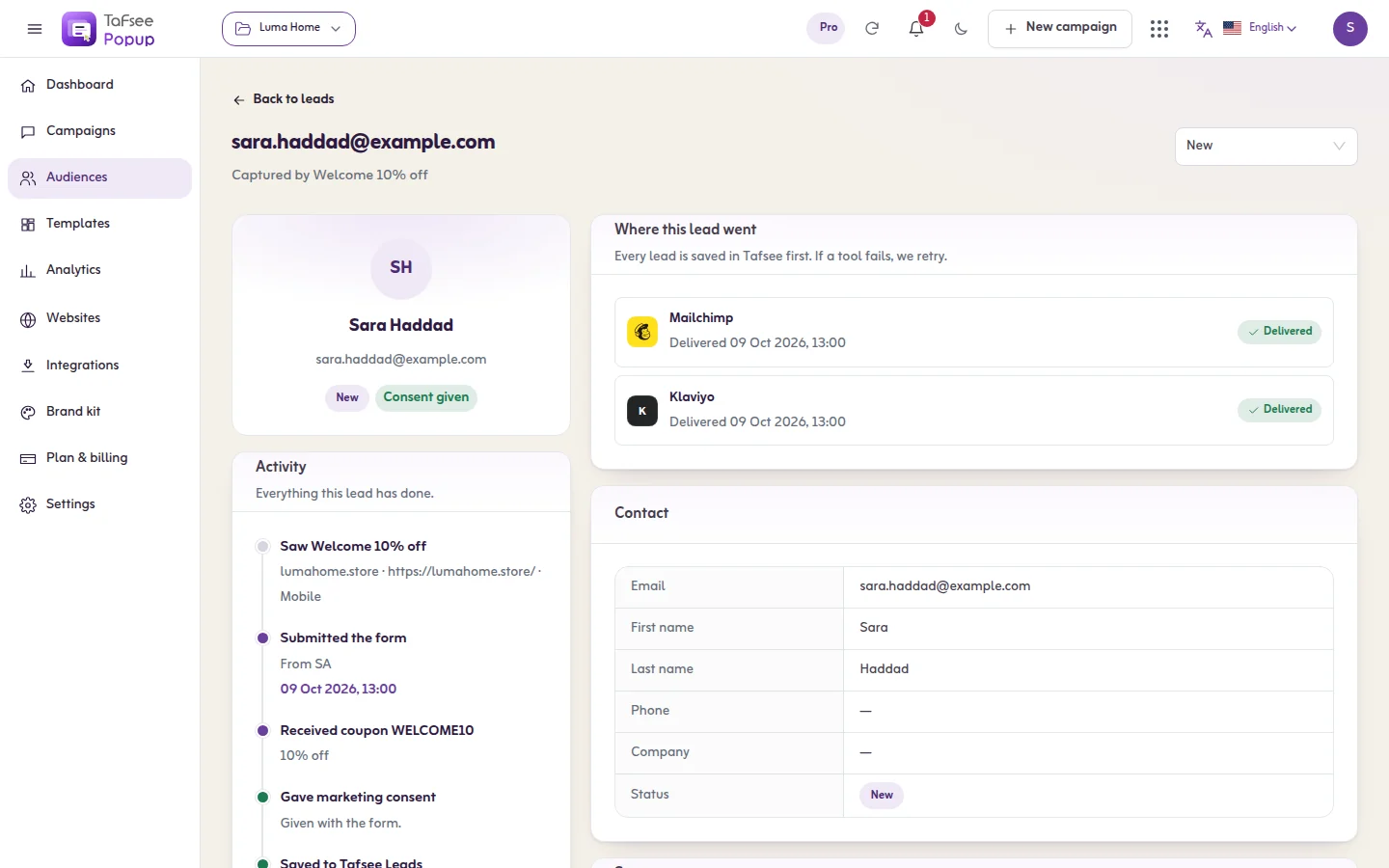
Tafsee Popup handles the on-site part of this list: popups, slide-ins, floating bars, spin-to-win and countdowns, with 39 targeting and trigger rules, A/B testing and native Arabic templates. Leads are stored in Tafsee first and delivered to Mailchimp, Klaviyo, HubSpot, Zoho CRM, Google Sheets, Slack or a webhook, with a delivery log and retries. Explore the lead generation tool or see pricing, which starts with a free plan.
Frequently asked questions
Start by capturing the visitors you already have with a clear, relevant offer on your key pages. It costs little, you can measure it quickly, and it improves the return on every other channel that sends traffic.
Yes, provided people explicitly agree to receive messages, you explain what you will send, and you use the official WhatsApp Business Platform. Check local data protection rules for your sector.
Tag every lead with its source, then compare conversion rate, lead quality and the share that becomes customers. Scale the channels that produce customers, not just signups.