
Every store has shoppers who add products to the cart and then disappear. Some were only browsing, but many were close to buying and hit a problem. Reducing cart abandonment means removing those problems first, then reminding the right people at the right time.
Why shoppers abandon their carts
- Unexpected costs: delivery fees, taxes or cash-on-delivery charges that appear late.
- Forced account creation before checkout.
- Slow or long checkout, especially on mobile.
- Missing payment options: a preferred card, wallet, cash on delivery or buy-now-pay-later option is not there.
- Trust doubts: unclear returns, no contact details, an unfamiliar brand.
- Delivery uncertainty: no delivery date or no coverage information for their city.
- Just comparing: saving items to decide later or comparing prices elsewhere.
You cannot win back every cart, but the first six reasons are fixable.
Fix the checkout first
- Show the full cost early. Display delivery fees and any COD charge on the product page or in the cart, not only at the last step.
- Allow guest checkout. Offer account creation after the order, not before.
- Shorten the form. Remove optional fields, use address auto-complete, and keep phone number formats flexible for Gulf numbers.
- Offer the payment methods your customers expect. In the UAE and Saudi Arabia this often includes cards, Apple Pay, local wallets, buy-now-pay-later providers and cash on delivery.
- State delivery times clearly, by city if possible.
- Make returns and support visible. A short returns summary and a WhatsApp support link near the payment button reduce hesitation.
- Test on a real phone. Complete a purchase yourself on mobile data, in Arabic and in English.
On-site tactics that recover carts
Exit-intent reminder on the cart page
When a shopper with items in the cart moves to leave, show a short message: what is in their cart, a reassurance (free returns, delivery date), and a button back to checkout. An exit-intent popup works on desktop via cursor movement and on mobile via signals such as a fast scroll up or back navigation.
Free-shipping progress bar
A floating bar that says 'You are AED 40 away from free delivery' gives shoppers a reason to complete, and often to add one more item. It is more margin-friendly than a discount.
Save the cart for later
Some shoppers are genuinely not ready. Offer to send the cart to their email or WhatsApp so they can come back. This turns a lost session into a lead you can follow up with.
Honest urgency
If a sale really ends at midnight, a countdown timer helps. If it does not, do not fake it: fake timers damage trust and can breach consumer protection rules.
Follow up after they leave
- Email reminders: a first reminder within a few hours, a second a day later. Keep them simple: the products, a clear link back and your support contact.
- WhatsApp reminders: effective in the Gulf, but only for customers who opted in. Keep frequency low.
- Answer the real objection: if returns worry people, lead with the returns policy rather than a coupon.
Be careful with discounts
Giving every abandoner a discount teaches customers to abandon on purpose. Use discounts selectively: for first-time visitors, above a cart value, or only in the second reminder. Try non-discount incentives first, such as free delivery, a small gift or a guaranteed delivery date.
What to measure
- Cart-to-checkout and checkout-to-order rates, on mobile and desktop separately.
- Recovery rate from reminders and on-site messages.
- Average order value, to make sure incentives are not eroding margin.
- Discount code usage, to spot codes leaking to coupon sites.
How Tafsee Popup helps
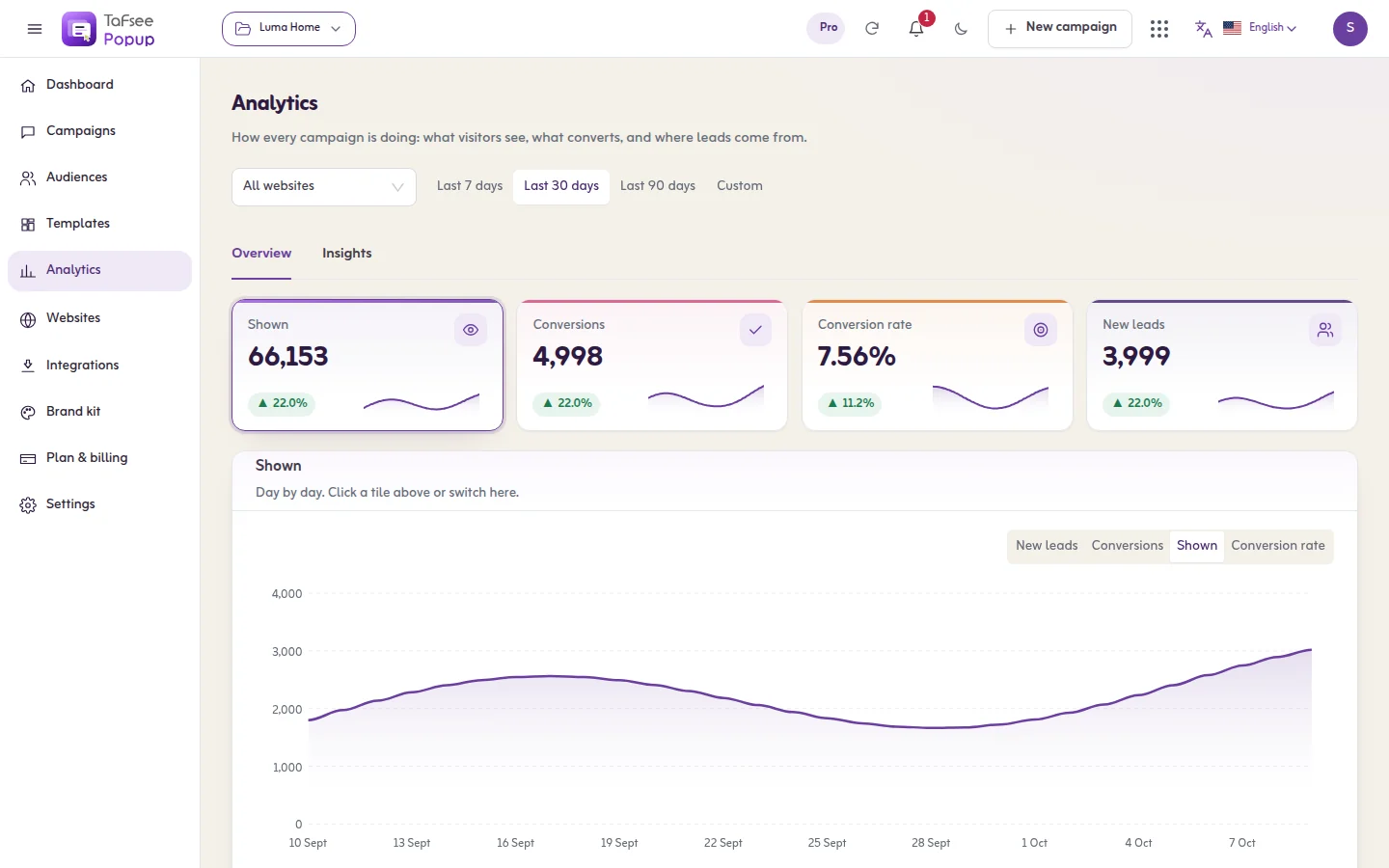
Tafsee Popup lets you run cart-page exit-intent reminders, free-shipping bars and come-back-later signup forms without code, targeted by URL, device and new or returning visitors. Captured leads flow to Klaviyo, Mailchimp, HubSpot or Zoho CRM for follow-up. See the cart abandonment use case or start on the free plan.
Frequently asked questions
Unexpected extra costs at checkout, such as delivery fees, are one of the most frequently reported reasons. Showing the full cost early is usually the first fix to make.
No. It can train customers to abandon on purpose. Try free delivery, reassurance or a reminder first, and reserve discounts for specific segments or a second reminder.
Mobile has no cursor, so exit intent relies on other signals such as a fast scroll towards the top or back navigation. Tafsee Popup supports exit intent on both desktop and mobile.