
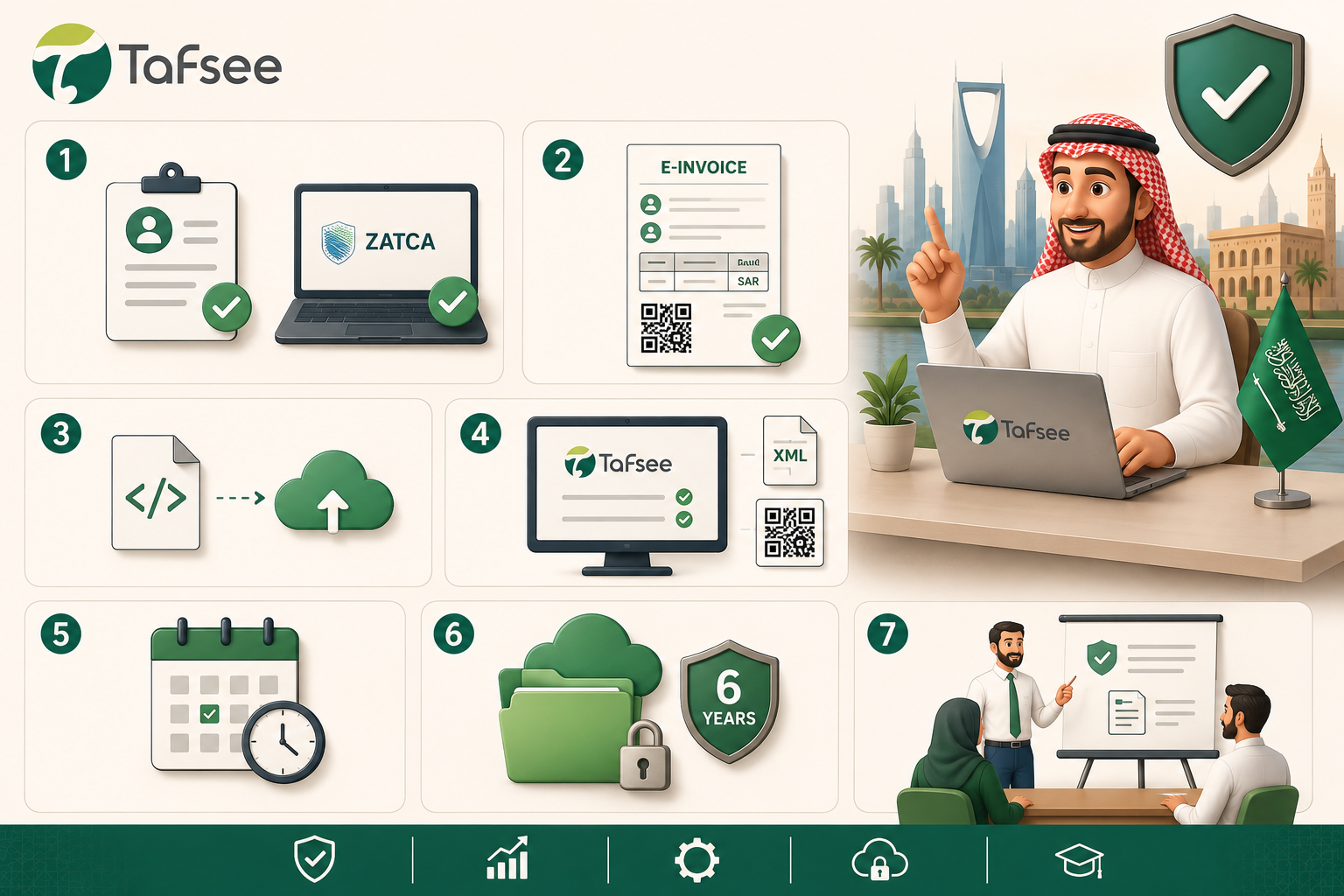
تشترط هيئة الزكاة والضريبة والجمارك (ZATCA) على جميع الشركات المسجلة في السعودية إصدار فواتير إلكترونية تتبع قواعد تقنية وتجارية محددة. سواء كنت متجرًا صغيرًا أو مؤسسة كبيرة، فالامتثال إلزامي.
لماذا يهم الامتثال لـ ZATCA للأعمال السعودية
عدم الامتثال قد يؤدي إلى رفض الفواتير وغرامات وتعقيدات في التدقيق. قائمة تحقق منظمة تساعد فريقك المالي على الالتزام بمتطلبات المرحلة الأولى والثانية دون إصلاحات في اللحظة الأخيرة.
قائمة التحقق من الامتثال لـ ZATCA
- تسجيل والتحقق من الرقم الضريبيابدأ بتسجيل الشركة والتحقق من الرقم الضريبي في بوابة ZATCA. بدون رقم ضريبي صالح، لن يتم قبول أي من فواتيرك.
- تضمين الحقول الإلزاميةتأكد من أن جميع الفواتير تحتوي على الرقم الضريبي للبائع والمشتري، وتاريخ الفاتورة، والبنود مع تفصيل ضريبة القيمة المضافة، ورمز QR، ورقم فاتورة تسلسلي فريد.
- فهم المرحلة الأولى والثانيةالمرحلة الأولى (التوليد) تتطلب فواتير إلكترونية منظمة بدلاً من الفواتير اليدوية أو PDF. المرحلة الثانية (التكامل) تضيف الإبلاغ والمقاصة في الوقت الفعلي عبر أنظمة ZATCA.
- استخدام برنامج محاسبة متوافقاستخدم برنامجًا يتبع متطلبات الفوترة الإلكترونية من ZATCA — مثل تفسير بوكس — لأتمتة ربط الحقول وتوليد رمز QR ومخرجات XML.
- جدولة مطابقة شهريةاكتشف الفواتير المرفوضة أو المعلقة قبل تراكمها. التراكم الصغير قد يتحول سريعًا إلى خطر على الامتثال.
- الاحتفاظ بالسجلات لمدة 6 سنواتاحتفظ بسجلاتك الضريبية لمدة 6 سنوات على الأقل وفقًا لقانون الضرائب السعودي. أدوات السحابة توفر أرشيفًا قابلًا للبحث ومحميًا.
- تدريب فريقك الماليتنشر ZATCA بانتظام إرشادات جديدة ومتطلبات حقول ومواصفات تقنية. البقاء محدثًا يحميك من الغرامات.
الحقول الإلزامية في كل فاتورة ZATCA
قبل إرسال الفواتير، تأكد من أن كل مستند يتضمن ما يلي:
- الرقم الضريبي للبائع والمشتري
- تاريخ الفاتورة ورقم فاتورة تسلسلي فريد
- بنود مع تفصيل ضريبة القيمة المضافة
- رمز QR متوافق مع ZATCA
- تنسيق إلكتروني منظم (XML) لإبلاغ المرحلة الثانية
المرحلة الأولى مقابل الثانية: ما الذي تحتاج معرفته
| المرحلة | التركيز | ما يجب على الشركات فعله |
|---|---|---|
| المرحلة 1 (التوليد) | توليد الفواتير الإلكترونية | إصدار فواتير بتنسيق إلكتروني منظم مع الحقول المطلوبة ورموز QR |
| المرحلة 2 (التكامل) | الإبلاغ والمقاصة الفورية | ربط الأنظمة بـ ZATCA للإبلاغ والتحقق وسير عمل المقاصة |
كيف يساعدك تفسير بوكس على البقاء متوافقًا
الفوترة اليدوية تزيد الأخطاء وتبطئ عمليات ZATCA. تفسير بوكس مبني لسير عمل الفوترة الإلكترونية السعودية ويساعد الفرق على:
- إنشاء فواتير جاهزة لـ ZATCA مع رموز QR والترقيم التسلسلي
- أتمتة مخرجات XML وربط الحقول لتكامل المرحلة الثانية
- تتبع المقبول والمعلق والمرفوض في لوحة واحدة
- الحفاظ على سجلات جاهزة للتدقيق مع نسخ سحابية وصلاحيات حسب الدور
لأرشفة النفقات وأتمتة الإيصالات، راجع دليلنا حول أفضل برامج الإيصالات الذكية في السعودية (2026).
لإعداد الفوترة الإلكترونية داخل مساحة العمل، اتبع دليل إعداد الفوترة الإلكترونية في تفسير بوكس.
الأسئلة الشائعة
ما هو الامتثال للفوترة الإلكترونية من ZATCA؟
يعني أن شركتك تصدر فواتير إلكترونية تلتزم بالقواعد التقنية والتجارية لـ ZATCA، بما في ذلك الحقول المطلوبة ورموز QR وسير عمل الإبلاغ.
هل الامتثال لـ ZATCA إلزامي في السعودية؟
نعم. يجب على الشركات المسجلة في السعودية اتباع متطلبات الفوترة الإلكترونية من ZATCA وفق المرحلة وجدول التكامل المطبق.
ما الفرق بين المرحلة الأولى والثانية؟
المرحلة الأولى تركز على توليد فواتير إلكترونية منظمة. المرحلة الثانية تضيف التكامل للإبلاغ والمقاصة في الوقت الفعلي عبر أنظمة ZATCA.
ما الحقول المطلوبة في فواتير ZATCA؟
تشمل الحقول الأساسية الرقم الضريبي للبائع والمشتري، وتاريخ الفاتورة، وتفصيل ضريبة القيمة المضافة، ورمز QR، والترقيم التسلسلي الفريد.
كيف يساعد تفسير بوكس في الامتثال لـ ZATCA؟
يؤتمت تفسير بوكس الفوترة الجاهزة لـ ZATCA وتوليد QR/XML وتتبع الإرسال والاحتفاظ بالسجلات على المدى الطويل.